


The New Standard of Energy Efficiency
ADVANCED HYDRODYNAMIC TECHNOLOGY FOR MORE EFFICIENT SHIPPING

LOWER EMISSIONS
CLEANER OCEANS

HIGHER EFFICIENCY
IMPROVED OPERATION

INNOVATIVE SOLUTIONS
FOR ALL SHIP TYPES

SUSTAINABILITY
A SEA FOR THE FUTURE

Advanced Hull Technology
Ship and Sea in Harmony.
Less resistance.
Electronic control.

Computational Insight
High-Resolution CFD-simulations.
The Ultimate Hydrodynamic Efficiency.
Convergence precision.

Interactive Vessel Information
Optimizations for the next level.
A shipping sector in change.
More speed, less consumption.


Growing Global Shipping Demands Smarter Hydrodynamic Solutions
Through the convergence of advanced surface engineering, ultrahydrophobic phenomena, multiphase fluid dynamics and precisely controlled gaseous interfaces, a new generation of hydrodynamic boundary-layer optimization becomes possible. By integrating sophisticated electromagnetic modulation with adaptive interfacial control, the technology introduces an entirely new dimension of hull efficiency, redefining the interaction between water, energy and surface.


More Maritime Traffic. Innovative Hydrodynamics. Advanced Technology.
The fundamental interaction between seawater and ship hulls is entering a new era of technological possibilities. Physical phenomena once regarded as inherent limitations of conventional hydrodynamics are becoming increasingly accessible to sophisticated intervention, creating new opportunities to influence fluid behavior, interfacial dynamics, and boundary-layer interactions in ways previously beyond technological reach.
As these capabilities continue to evolve, the physical conditions governing a vessel’s passage through water are becoming increasingly responsive to precise technological control. This emerging frontier of maritime engineering has the potential to redefine the boundaries of hydrodynamic performance and transform the future of global maritime transportation.


Improved Stability. Increased Maritime Mobility.
Beyond the visible forces of the ocean lies a complex world of hydrodynamic interactions, where wave energy, vessel dynamics, and the physical properties of seawater govern the limits of maritime mobility. By transforming the interaction between ocean dynamics and onboard systems into a responsive framework of technological control, a new generation of maritime engineering is emerging. The future of vessel design is no longer defined solely by the limitations imposed by the sea, but increasingly by the intelligence and capabilities of the technologies developed to navigate it.


From Computational Insight to Engineering Breakthroughs
Advanced computational fluid dynamics and multidisciplinary numerical analysis are opening new frontiers in understanding the intricate interactions between fluids, surfaces, energy, and matter. Drawing on extensive simulation experience across fluid mechanics, thermodynamics, electromagnetism, and fundamental physics, our approach integrates complex physical phenomena across multiple scales to explore technological concepts beyond conventional engineering boundaries.
By connecting insight with sophisticated computational modeling, we bring theory closer to practical innovation, enabling more informed predictions, deeper technological understanding, and a more systematic path from pioneering concepts to real-world solutions.


Research & Development Projects
EXPLORING THE TECHNOLOGIES THAT COULD REDEFINE INDUSTRIES
Non-Mechanical Tunnelling & Processing

Material Processing
As the boundaries of precision engineering continue to expand, new technological possibilities are emerging at the intersection of advanced physics, energy modulation, and material science. The ability to influence material behavior with frequencies and precision opens new horizons for processing methods that extend beyond conventional mechanical and thermal limitations.
These evolving capabilities hold the potential to transform how materials are shaped, separated, and processed, paving the way for new industrial possibilities across multiple sectors.
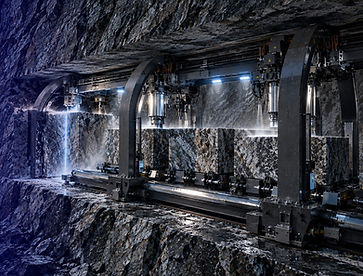
Non-mechanical Tunnelling
The future of tunnelling may lie beyond the mechanical principles that have shaped underground construction for generations. Emerging approaches to advanced rock processing and precision excavation challenge conventional assumptions about how solid geological formations can be penetrated, separated, and transformed into infrastructure.
By reimagining the technological foundations of tunnelling, entirely new possibilities emerge for construction speed, geological accessibility, and engineering scale. The potential extends to transportation networks, subsea connections, and major infrastructure projects, opening pathways towards a world where geography presents fewer barriers to human mobility and connectivity.

Mining Technology
Deep beneath the Earth's surface lie vast mineral resources, many of which remain beyond the practical reach of conventional mining technologies. As new approaches to underground access and material transformation emerge, the boundaries of resource extraction may begin to shift in ways that challenge long-established industrial practices.
The combination of advanced excavation concepts and precision-oriented processing opens a broader vision for the future of mining, one where previously inaccessible resources become increasingly attainable, extraction becomes more selective, and environmental demands are addressed through technological innovation rather than industrial compromise.
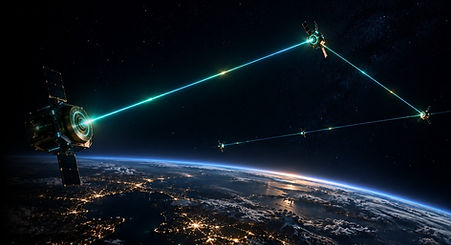
Wireless Energy Transmission
The ability to transmit electrical energy without physical conductors has long represented one of the most compelling frontiers of electrical engineering. Although wireless power transfer is already a technological reality, its broader potential remains constrained by challenges in transmission distance, power capacity, and efficiency.
Advances in electromagnetic science, precision energy control, and transmission engineering offer new possibilities for overcoming conventional limitations. The prospect of more adaptable, high-capacity wireless energy systems could open new pathways for industrial power distribution, remote infrastructure, and space-based applications, bringing the vision of a more interconnected energy future closer to reality.

Aerospace Technology and Space Travel
The next chapter of aerospace engineering may be defined not only by how vehicles generate propulsion, but by how the energy driving their motion is supplied. Moving beyond the traditional dependence on onboard fuel opens new possibilities for propulsion architectures, launch technologies, and the relationship between energy infrastructure and aerospace transportation.
From reaching space to travelling across continents through the upper atmosphere, these emerging concepts could reshape the boundaries of speed, range, and transportation efficiency.

Nuclear Fusion Technology
The pursuit of controlled nuclear fusion represents one of the greatest scientific and engineering challenges of our time. Despite decades of progress, the path towards practical fusion power remains constrained by extraordinary demands on energy control, physical conditions, and system complexity.
New approaches to advanced energy engineering and fundamental physics offer possibilities for reimagining these limitations. The prospect of compact, adaptable fusion systems could extend the reach of nuclear energy far beyond conventional power infrastructure, from maritime vessels and offshore installations to remote communities, industrial facilities, and future space habitats. A new frontier in energy technology, with the potential to transform how and where humanity generates power.

Quantum Entanglement Networks
By exploring deeper levels of quantum correlations, multi-particle entanglement, and the fundamental structures underlying their interactions, new theoretical perspectives may open pathways towards increasingly sophisticated quantum network architectures.
At the intersection of elementary physics and emerging quantum technologies lies the potential to translate these complex natural phenomena into new forms of computational capability, expanding the possibilities of quantum information processing, network complexity, and the technological utilization of nature's most fundamental interactions.

GET IN TOUCH
Contact Us
We are always open to discussions about our research, technology concepts and potential collaborations. Whether you have questions, ideas or opportunities to explore, we welcome your message.


COMPANY AND ADDRESS
INSVIVIA TECHNOLOGIES AS
Manshausveien 22
4432 Hidrasund

PHONE AND CONTACT
CEO: Ivan Nilsen
(+47) 953 06 009

About Us
Founded on a background of research and development in maritime engineering, InSvivia has explored advanced hydrodynamic and aerodynamic systems through computational fluid dynamics (CFD) and multidisciplinary analysis since 2012. This work has included collaboration with experimental research facilities across Europe, connecting numerical simulations with practical engineering research.
Over the years, this maritime foundation has evolved into a broader exploration of technological concepts across multiple industrial sectors. Driven by a deep interest in fundamental physics and engineering innovation, InSvivia approaches research from its most theoretical foundations to computational analysis, experimental investigation, and the pursuit of practical applications.
